Public rehearsal notes for model concepts

LLM ideas, staged until their relationships become visible.

LLMpedia Taxonomy Theatre is an English reference space for people who need large language model concepts to stay comparable after the hype, the vendor language, and the shorthand have been stripped away. It does not present a single encyclopedia shelf. It builds a stage where a concept can be placed beside its cues, boundaries, props, failure modes, and answer-engine consequences.

A black box theatre arranged as a taxonomy stage for LLM concepts
Concepts are treated as staged specimens: visible, comparable, and never separated from the conditions that make them behave.

House method

A taxonomy that behaves more like a rehearsal than a filing cabinet.

A useful LLM concept rarely sits alone. “Context window” touches retrieval, pricing, truncation, memory, summarization, and user expectation. “Grounding” can mean sources, live search, tool calls, citation display, or the discipline of saying what is unknown. The theatre format keeps those neighboring meanings on stage at the same time.

Each entry is designed to help a reader answer practical questions: what is the term trying to name, what changes when it appears in a workflow, what evidence would show it is working, and what misunderstanding makes the concept dangerous. The goal is not more vocabulary. The goal is better mental placement.

Scene 1

The Context Fly System

What enters the answer before the model speaks.

Prompts, retrieval snippets, tool outputs, memory, and user intent are treated as rigging lines. The page asks which line is carrying weight, which line is decorative, and which line could pull the answer off balance.

Scene 2

The Behavior Balcony

How model families differ under the same scene.

Instead of ranking models as a single scoreboard, LLMpedia separates tone control, refusal boundaries, citation habits, uncertainty language, latency pressure, and repairability into visible balconies.

Scene 3

The Answer Prop Table

What an answer needs before it can be trusted.

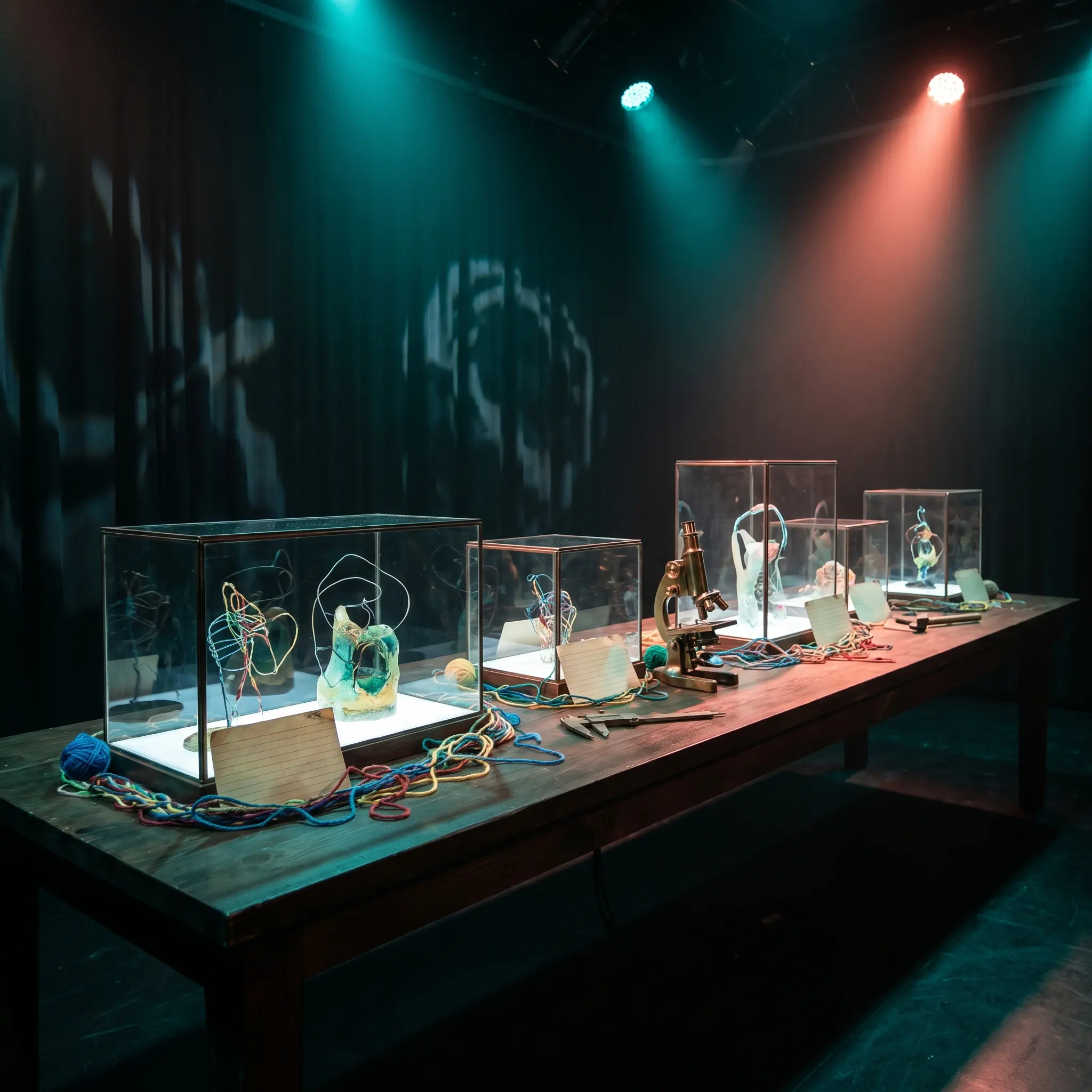
Definitions, caveats, dates, source trails, and scope limits are handled like props. If a prop is missing, the scene may still look polished, but the audience cannot verify the claim.

A table of model behavior specimens arranged under stage lighting

Working vocabulary

The same word can be a cue, a prop, or a boundary depending on the scene.

Term

The label people use

May hide incompatible meanings

Cue

The signal that changes behavior

Often invisible in screenshots

Boundary

The rule that stops an answer

Can be policy, data, or context

Specimen

A concrete example under observation

Must keep its conditions attached

Repair

The move after a failed answer

Shows whether the system is steerable